If you've ever held a chikankari piece in your hands, you know it feels different. The delicate white threadwork on fine muslin, the subtle patterns that catch light only when you tilt the fabric. It's the kind of craft that doesn't shout for attention. It whispers. And that's exactly what makes it so easy to overlook in a world that rewards the loud and the fast.
Chikankari is one of Lucknow's oldest and most celebrated embroidery traditions, believed to date back to the Mughal era. Some historians trace its origins to the 3rd century BC, while others attribute its popularization to Nur Jahan, the wife of Mughal Emperor Jahangir, who is said to have introduced Persian embroidery techniques to the artisans of Awadh. Regardless of where the story begins, what's clear is that chikankari has survived centuries, and the women of Lucknow have been its quiet custodians.
What Makes Chikankari Special
At its core, chikankari is hand embroidery done on lightweight fabrics like muslin, cotton, chiffon, and georgette. The craft involves over 30 different types of stitches, each with its own name and technique. Some of the most well-known ones include taipchi (a flat running stitch), bakhia (a shadow work stitch done from the reverse side), and phanda (a tiny, grain-like stitch used for filling).
What sets chikankari apart from other forms of embroidery is the sheer variety of stitches and the discipline required to execute them. A single garment can take anywhere from a few days to several months depending on the complexity of the design. And yet, the artisans who do this painstaking work are often paid very little for it.
Traditional chikankari is white-on-white, thread on muslin. There's something deeply elegant about that simplicity. In recent years, colored threads and contemporary designs have been introduced to appeal to modern consumers, which has helped expand the market. But the purists will tell you that the real beauty of chikankari lies in the original form. The restraint of it. The fact that all that skill is poured into something so understated.
The Women Behind the Needles
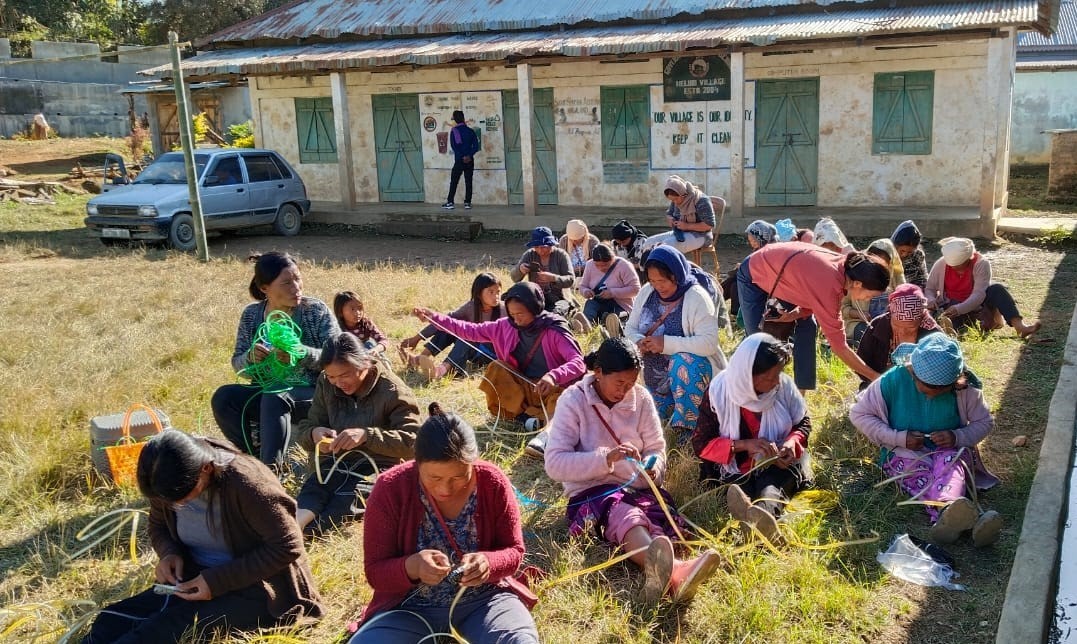
The reality behind this beautiful craft is complex. The majority of chikankari artisans are women, many from low-income Muslim households in and around Lucknow. They often work from home, sitting on the floor with the fabric stretched across their laps, stitching for hours at a time. Most of them learned the craft from their mothers and grandmothers.
Despite the high demand for chikankari in domestic and international markets, the wages that reach these women remain disproportionately low. The supply chain involves multiple middlemen, from the fabric supplier to the printer who stamps the design to the artisan who embroiders it to the trader who sells the finished product. By the time a chikankari kurta reaches a retail store in Delhi or Mumbai, the artisan who spent days embroidering it may have earned only a fraction of the final selling price.
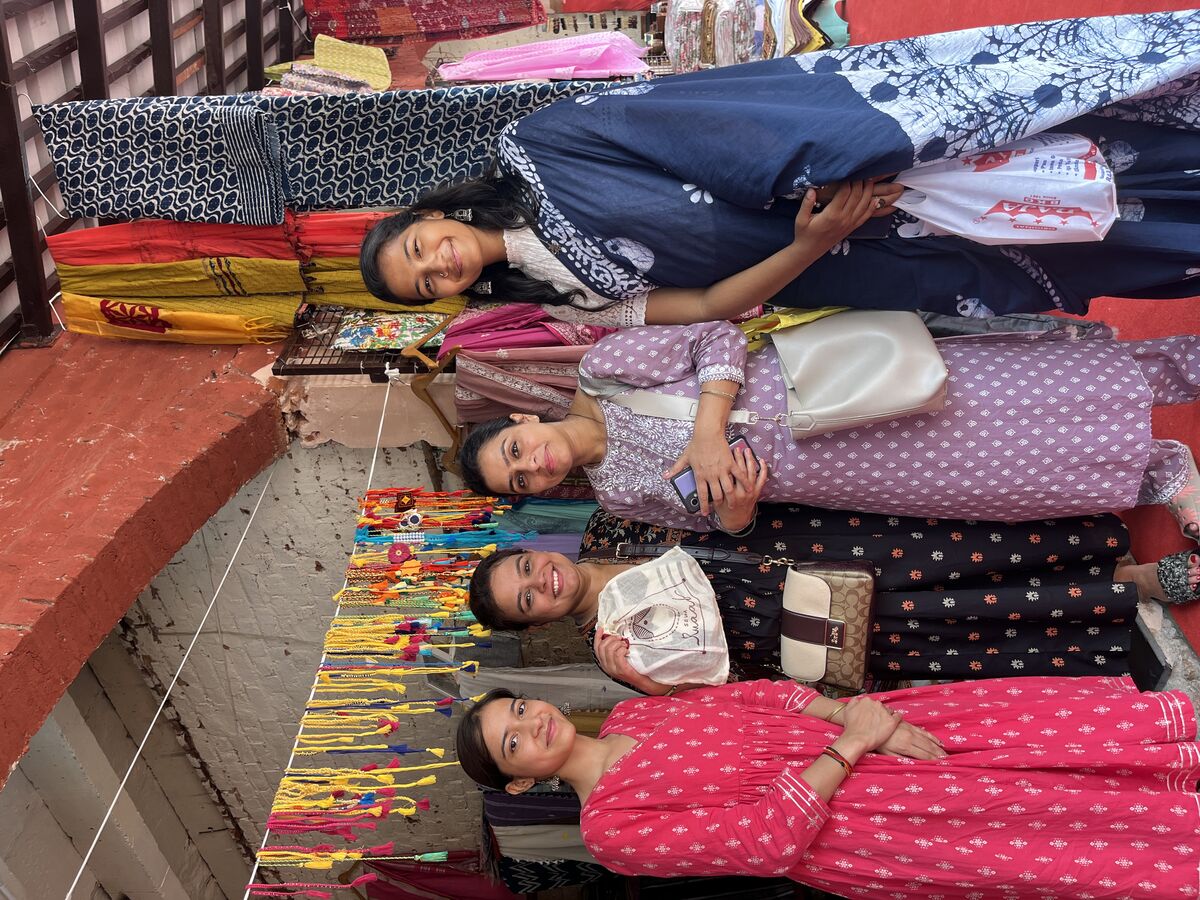
This is exactly the kind of gap that organizations like ours are trying to bridge. Through our work at Minds of Meraki Foundation, we've had the privilege of engaging with artisan communities, including those working with SEWA Ruaab, where women create chikankari pieces alongside silk sarees from Bihar and upcycled products. At the Nature Dastakar Mela in Delhi in December 2024, we saw firsthand how these artisans light up when they interact directly with consumers, when there's no middleman translating their story.
A Craft Under Threat
Like many traditional crafts in India, chikankari faces serious threats. The biggest one is machine-made imitation. Mass-produced "chikankari" pieces flood the market at a fraction of the cost, and most consumers can't tell the difference. A machine-embroidered kurta might cost Rs 500 while a hand-embroidered one could cost Rs 2,000 or more. For the average buyer, the choice seems obvious. But it's worth asking: what are we really paying for?
When you buy handmade chikankari, you're paying for skill that has been passed down through generations. You're paying for the artisan's time, her patience, and her eye for detail. You're investing in a tradition that gives women a source of income and a sense of identity. When you buy the machine-made version, none of that happens.
The younger generation of artisans is also dwindling. Many daughters of chikankari workers choose to pursue other livelihoods because the pay is too low and the work is physically demanding on the eyes and hands. Without intervention, this could mean that within a generation or two, the authentic craft may fade away entirely.
What's Being Done
There are efforts underway to protect and revive chikankari. The Geographical Indication (GI) tag was granted to Lucknow chikankari in 2008, which provides a degree of legal protection against counterfeits. Organizations working in the craft sector, including cooperatives, NGOs, and social enterprises, are creating direct market linkages for artisans, cutting out unnecessary middlemen and ensuring fairer wages.
At Meraki, we believe that one of the most effective ways to support crafts like chikankari is through a combination of skill training, market access, and storytelling. Our bootcamps teach artisans the business side of things, like pricing, branding, and digital marketing, while our exhibitions give them platforms to sell directly to conscious consumers. During Dilli Haat, our artisans made more than their monthly earnings in sales, which showed us what's possible when artisans have direct access to the right audience.
How You Can Help Preserve Chikankari
The simplest thing you can do is learn to tell the difference between handmade and machine-made chikankari. Hand-embroidered pieces have slight irregularities. The stitching on the reverse side is as neat as the front in techniques like bakhia. The fabric feels lighter and more breathable. Machine-made pieces, on the other hand, tend to have perfectly uniform stitches and a stiffer feel.
When you buy, ask where it was made and who made it. Look for brands and organizations that work directly with artisans and are transparent about their sourcing. Share what you learn with others. The more people understand the value of authentic chikankari, the harder it becomes for cheap imitations to dominate the market.
Chikankari is not just embroidery. It's a livelihood for thousands of women. It's a connection to India's rich textile history. And it's a craft that deserves to be seen, valued, and preserved, not just for its beauty, but for the hands that create it.
Minds of Meraki Foundation works with women artisans across India to provide skill training, market access, and advocacy. To learn more or get involved, write to us at projectmeraki.womenatdior@gmail.com
Share this article: